What Nobody Tells You About Taking Time Off Work for Cosmetic Surgery
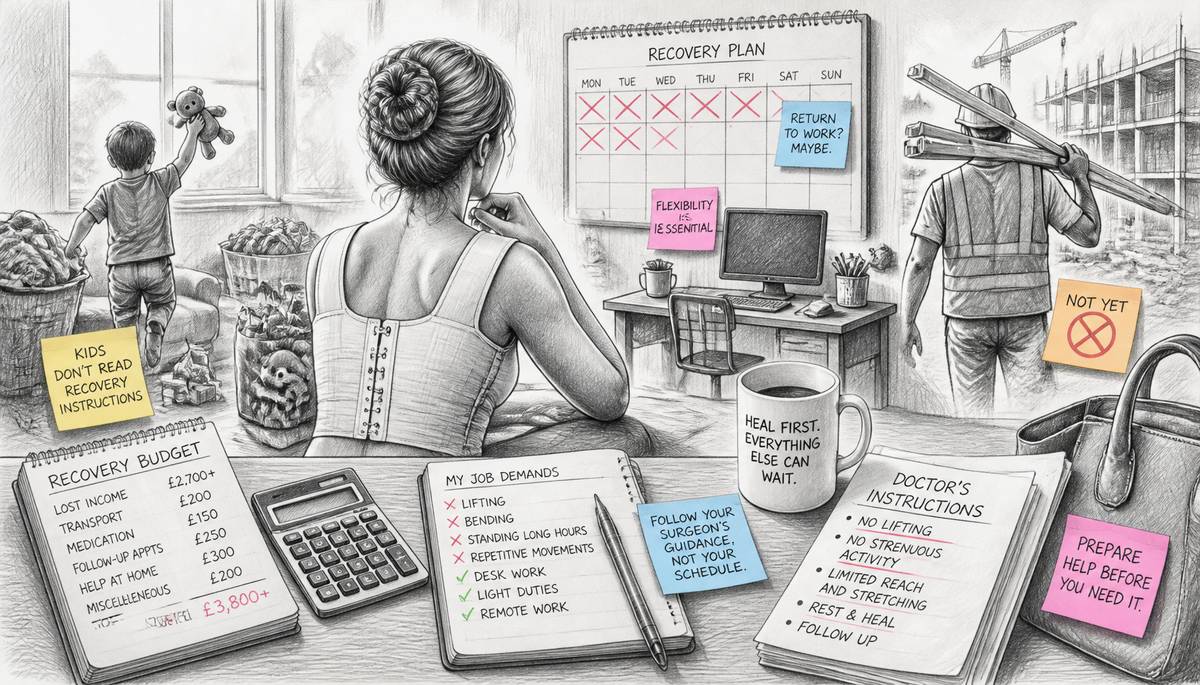 Your employer may be considerably less impressed by your new appearance than by the discovery that you cannot lift a stapler for three weeks. Cosmetic surgery involves more than choosing a procedure, arranging payment and imagining the finished result. Recovery introduces an entirely different set of practical problems, particularly for anyone who works, raises children or has a household that stubbornly refuses to run itself.
The financial cost of surgery is usually discussed beforehand. The cost of temporarily becoming a less productive version of yourself receives rather less attention.
Why Your Job Description Matters More Than You Think
Returning to work after cosmetic surgery depends heavily on what that work involves. Someone employed in an office may be able to resume certain duties relatively quickly, provided discomfort, medication and fatigue do not interfere with concentration. A construction worker, warehouse employee or fitness instructor faces a different situation.
Physical occupations often involve lifting, stretching, bending or repetitive movements that can place strain on healing tissues. Following procedures such as breast augmentation or abdominoplasty, these activities may be restricted for several weeks or longer, depending on the operation and individual recovery.
Even apparently sedentary jobs can present difficulties. Sitting upright for prolonged periods may become uncomfortable after certain procedures. Commuting can involve crowded public transport, heavy bags or lengthy journeys. And anyone who has attempted to concentrate on a complicated spreadsheet while recovering from surgery will appreciate that pain medication and financial forecasting are not necessarily ideal companions.
Surgeons provide individual guidance on returning to specific activities. These restrictions should take precedence over optimistic workplace schedules.
The Unexpected Expense of Doing Nothing
Paid sick leave can soften the financial impact of recovery, but not everyone enjoys that protection. Self-employed workers, freelancers and people employed on hourly contracts may lose income for every day they cannot work.
Consider someone earning £180 per working day who requires three weeks away from employment. Fifteen missed working days represent £2,700 in lost earnings before accounting for any additional expenses. A recovery period extended by another week increases that figure to £3,600.
There may also be costs associated with transportation, prescription medication, follow-up appointments and temporary assistance at home. Insurance policies frequently exclude routine recovery expenses associated with elective cosmetic procedures, although individual coverage varies.
A sensible financial plan therefore includes a recovery budget alongside the surgical quotation, with enough flexibility to accommodate delays.
Children, Shopping Bags and Other Occupational Hazards
Parents face a particularly awkward recovery problem. Young children rarely recognise medical restrictions as legitimate reasons to stop demanding attention, food or immediate transportation to somewhere involving inflatable animals.
Lifting toddlers, carrying shopping, pushing heavy equipment and performing household chores may all conflict with postoperative instructions. Arranging practical help before surgery is considerably easier than attempting to recruit assistance while exhausted, uncomfortable and wearing compression garments.
When Recovery Refuses to Follow the Calendar
One of the greatest mistakes patients make is treating estimated recovery periods as guaranteed deadlines. Healing is a biological process, not a delivery service offering an inconveniently precise arrival window.
Swelling, bruising, fatigue and discomfort can persist longer than expected. Some patients experience complications such as infections, fluid accumulation or delayed wound healing, requiring additional medical attention and extended time away from work. Even uncomplicated recovery varies considerably between individuals.
Booking a return flight, important presentation or physically demanding assignment immediately after the anticipated recovery period leaves little room for unexpected developments. Building additional flexibility into the schedule is particularly important for people whose income depends on being physically present.
Persistent or worsening pain, fever, unusual swelling or concerning wound changes should prompt medical advice rather than an attempt to meet an arbitrary return-to-work date.
The Problem With Looking Better Before Feeling Better
Cosmetic surgery creates an unusual contradiction. Someone may appear sufficiently recovered to resume normal activities while their underlying tissues are still healing. External appearance is not a reliable measure of internal recovery.
This distinction matters when colleagues, friends or family members assume that visible improvement means all restrictions have ended. A person might comfortably attend a meeting yet remain unable to lift heavy objects or perform strenuous exercise.
Patients should understand the difference between returning to light duties, resuming ordinary daily activities and receiving clearance for unrestricted physical work. These milestones frequently occur at different stages.
Planning Your Absence Without Explaining Everything
Another consideration is workplace privacy. Employees may feel uncomfortable discussing cosmetic procedures with colleagues or managers, particularly when surgery is entirely elective.
Depending on local employment law and company policies, workers may need to provide appropriate medical documentation without necessarily revealing every detail of their treatment. However, elective procedures are not automatically covered by the same leave arrangements as medically necessary operations.
Discussing anticipated restrictions with an employer before surgery can help establish realistic expectations. Temporary remote working, reduced hours or modified duties may offer useful alternatives to an immediate full-time return.
For self-employed individuals, scheduling work in advance, notifying clients and arranging emergency cover can prevent recovery from becoming an administrative disaster.
Taking Leave Without Losing Your Balance
Successful recovery planning requires more than marking several days off on a calendar. It means understanding the physical demands of everyday life, calculating potential income losses and accepting that healing rarely follows a perfectly predictable timetable.
Before committing to surgery, patients should discuss their occupation, household responsibilities and financial circumstances with their surgeon. Written recovery instructions and realistic contingency arrangements can make the difference between a manageable interruption and several weeks of unnecessary stress.
After all, the purpose of cosmetic surgery is generally to improve something about your life. Having to explain to your accountant why a new appearance coincided with a spectacular deterioration in cash flow rather defeats the exercise.
|
|

